
17 years behind a camera. Now directing AI.
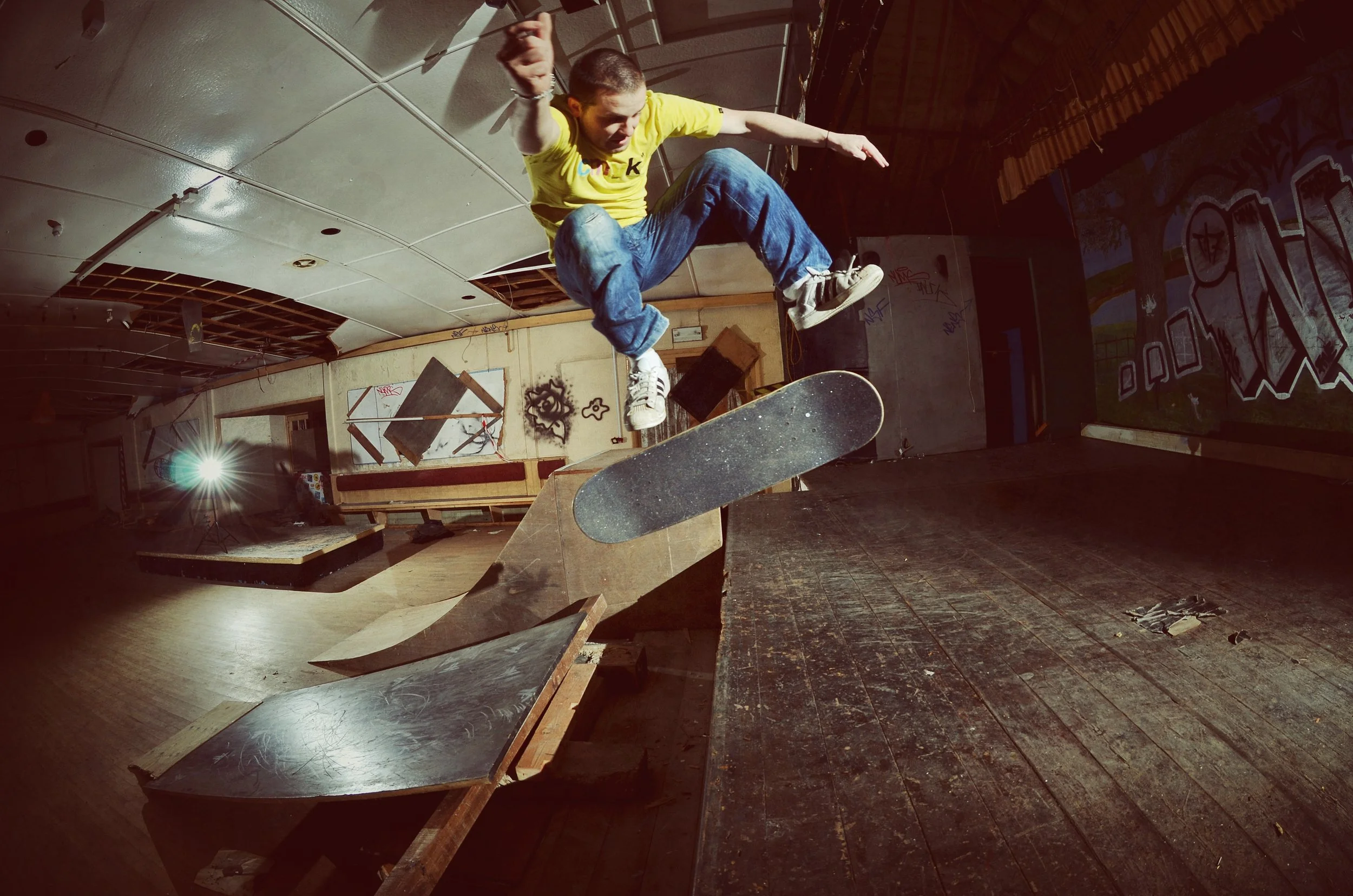
Kickflip in a disused holiday camp on the Isle of Wight, circa 2005
I started playing with cameras when I was 10. It was around the same time I got into skateboarding, so it wasn’t long before I was out shooting my mates’ newest tricks and borrowing my parents’ cam-corder to make skate films. I loved looking at the photography in Sidewalk magazine, and spent hours thinking about what lens they used and what lighting set-up. I soon realised I wanted to be a photographer when I grew up. It was a lot of hard work to break into the industry, and I’m grateful that I made it.
Seventeen years later I've shot huge sailing events, extreme sports athletes, product photography for the likes of Dyson, fashion photography for brands like Musto and Gymshark, food and drink, and a whole lot of events. In lockdown, I trained as a CGI artist.
Now I'm doing something I didn't see coming until a year ago: directing AI imagery for brand campaigns. I am still a photographer and CGI artist, and I think that experience brings a lot to AI image generation. It’s all about the human direction.
The project I’m most pleased with:
When I think about the work I'm most pleased with so far, the Brooks Running project sticks out. It was a concept project, testing what AI is capable of, before we started doing paid work for brands.
The obvious thing would have been to put a model on a muddy trail somewhere and shoot it. That's what you'd do if you were just prompting. But the idea I went in with was different. A white studio environment with mud. The Brooks logo built in mud. The runner breaking through that gap between the clean studio and the environment the product is designed for.
For real, that shoot would be a nightmare. You'd get one or two takes before the studio is destroyed. The set build alone would eat budget. The timing of a runner through a mud block - to keep everything else clean - is technically brutal.
In AI, I could work on that problem properly. Keep the product accurate. Keep the clothing right. Keep the whole set cohesive across a body of images, not just one hero shot. That's what made it work - not the tool, but having a clear idea of what I wanted and the patience to get there.
What I'm checking for
When I'm looking at an AI image, I'm running through the same checklist I'd run through on a set.
Lighting first. Does it make sense? Is the light source consistent across the whole image? Outdoor lighting on a studio scene - that's a fail. It might look fine at a glance but your brain picks it up.
Then composition. Does it work? Is there a reason the eye goes where it goes?
Then product accuracy. This is where most AI photography falls apart. The fine details like the stitching on a shoe, grip pattern, logo placement, zip position all matter to customers. Getting them wrong doesn't just look sloppy, it undermines the product entirely. So I'll sit with a product reference and go through it detail by detail before I'm satisfied.
Then realism. Does the model look real? Are they doing something that makes sense given what they're wearing and why they're wearing it?
And then the stuff people miss. A runner through a muddy path needs footprints behind them. A person who's been moving needs to look like they've been moving. AI won't add those details on its own - you have to direct it there. And if you don't, your brain clocks it immediately. Something feels off. You can't always say what it is, but the image fails.
The difference between technically fine and a great image
A technically perfect image of a shoe is still just a picture of a shoe.
What I'm trying to make is an image that makes you stop. That makes you look longer than you intended to. That makes you want to send it to someone and say “check this out!”.
That's the reaction you're after. Not just plausible. Not just real-looking. Something that has a feeling to it. Something that lands.
The Soar running vest is a good example of this for me. Black studio. Coloured vests. Light and motion. Refraction. It's simple, but it works because everything in the image is there for a reason. The colours, the movement, the composition are all pulling in the same direction. That's not the AI doing that. That's a decision I made before production started.
On making things that look generic
If a brand told me they were nervous about AI making them look generic, I'd say: the image isn't the problem. The bit before the image is the problem.
If you don't want a generic shot on a white background in a white studio, don't sign off the brief like that. The tool produces what you direct it towards. Generic briefs produce generic images. That's true in traditional photography too.
What we do is approach every project the same way you'd approach any production that needed imagery - get the idea first, get the products, establish the style, work out how we're going to shoot it and why, and then make the image. The creative direction and the judgment calls that happen in that process are what keep the output from being forgettable.
And it's collaborative. It doesn’t have to just be my creative direction. If a brand has an idea, we build that direction together. Then we make the images. That's how it should work.
The Goose and Gander one
People keep asking about this project, so I'll say a little bit about it.
It's a fairly obvious play on the name. Goose. But I didn't want a cartoon goose. I wanted a big, real-looking goose, and I wanted the models to be completely unbothered by it. Like that's just their goose. Normal. Nothing to see here.
That's a creative decision. If we have the same goose, same models, but they'd been looking shocked or reacting to it, the whole thing falls apart. It's that little bit of judgment - knowing what will work and what won't - that makes an image perform. Someone else could do the same thing, slightly differently, and it wouldn't work.
That's the thing about this kind of work. The same tools are available to everyone. The judgment calls are what make an image perform.
What I've learned
I started out being pretty sceptical. I'd seen what AI photography looked like and most of it looked like AI photography.
What I found is that the problems with AI imagery are the same problems you see in bad photography. Poor composition. Light that doesn't match the environment. A model who doesn't feel connected to the product. Details that are slightly off. Most of the time, these aren't AI failures. They're craft failures.
The craft hasn't changed. Knowing what looks good, knowing when something's wrong before you can say why, knowing which idea is worth pursuing - that's still entirely human.
The tools have changed. Everything else is the same.
Martin Allen,
Co-founder and Creative Director,
Mallen Studio
www.mallenstudio.com